


Emulsion or 100% Active? The Foam Control Decision Most Buyers Skip
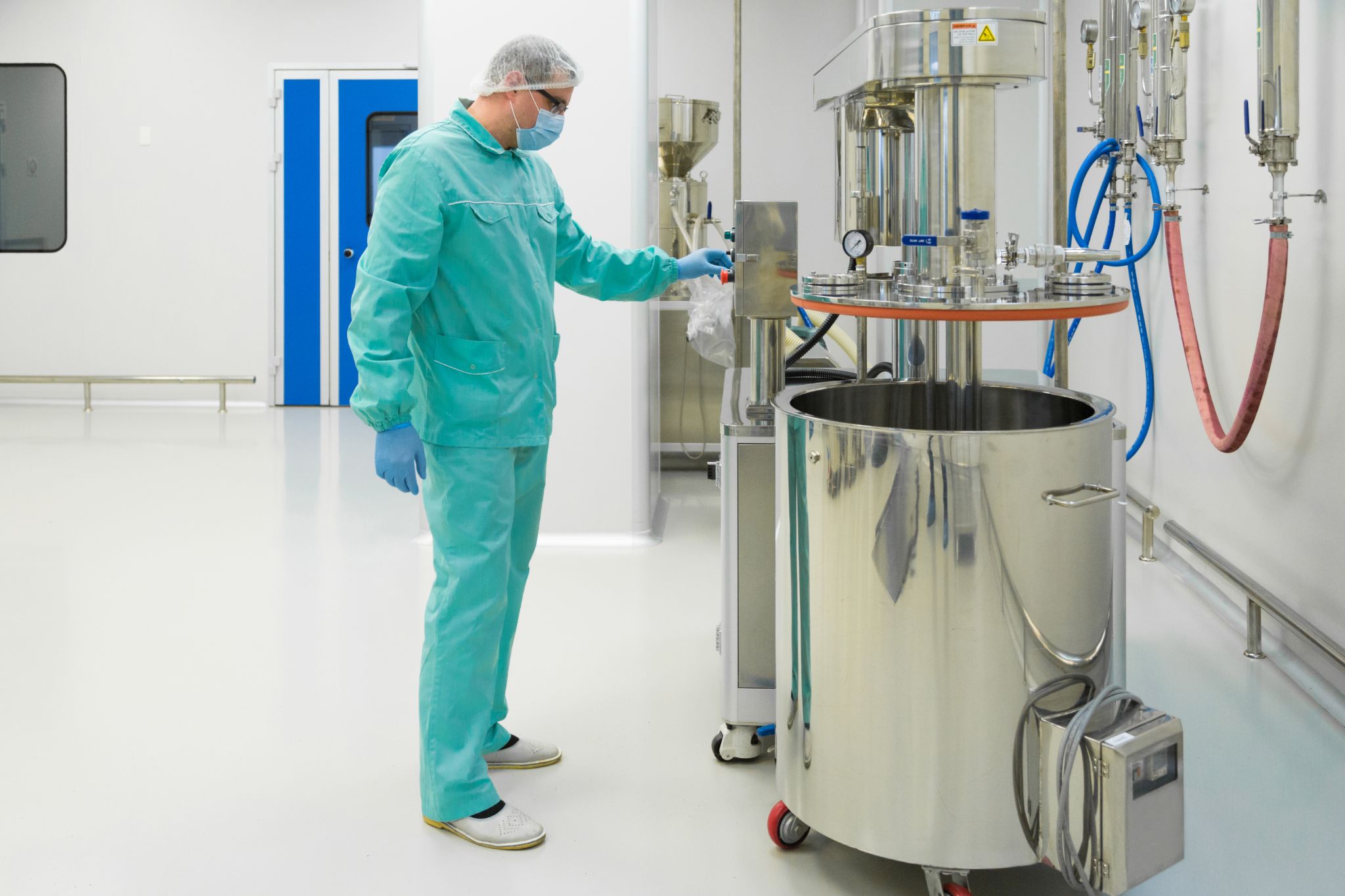
Most conversations about choosing an antifoam start and end with chemistry: silicone or non-silicone, oil-based or water-based. Buyers rarely get to a second question that matters just as much for cost and performance: should this be an emulsion or a 100% active product? At PMC Ouvrie, we find this is the choice that gets skipped, often because nobody explains what it actually changes on the plant floor.
What Are Foam Control Solutions Used For, and Why Does Form Matter?
Foam control solutions are used to prevent or eliminate unwanted foam across industrial processes, but the physical form of the product, an emulsion or a 100% active antifoam, determines how well it fits your specific dosing environment. The right choice depends on how tightly you can control dosing, how your process agitates the liquid, and whether unit cost or total treated cost matters more to you.
What An Emulsion Antifoam Is
An emulsion antifoam contains a proportion of water alongside its active ingredients. That composition gives it a lower viscosity, a lower price point, and notably fast knockdown, even where agitation in the process is poor. We’d point to environments where dosing control is inherently loose, what our R&D team describes as a “bucket-brigade” environment, as the case where an emulsion’s lower unit cost becomes the more practical choice. If dosing precision is hard to maintain, an emulsion’s characteristics work with that reality rather than against it.
What A 100% Active Antifoam Is
A 100% active antifoam is concentrated, without the water content of an emulsion, which gives it higher viscosity and a higher unit cost. That higher cost isn’t the whole picture, though. Where a process allows tighter dosing control, the concentrated formulation can be more cost-effective overall, since less product delivers the same result. The trade-off is straightforward: you pay more per unit, but you may need to use less of it, and only tighter control lets you capture that advantage.
What Actually Determines Which One Fits Your Process
This is the part a chemistry comparison alone won’t answer:
- Dosing control. Can your process maintain consistent, accurate dosing, or is it applied more loosely across variable conditions?
- Agitation. Poor agitation favors a formulation with fast knockdown even without much mixing energy.
- Application method. How and where the product enters the process affects which form disperses more effectively.
- Unit cost versus total cost. A lower unit price isn’t automatically the lower total cost once consumption and dosing control are factored in.
- Process consistency. A process with variable conditions may benefit from the more forgiving performance of an emulsion, while a stable, well-controlled process can capture the efficiency of a 100% active product.
None of these has a universal right answer. The honest position, and the one we take with customers, is that it depends on your specific application and how well you can control usage.
How PMC Ouvrie Tests Both Forms
Selecting between an emulsion and a 100% active product isn’t a judgment call made from a data sheet. Our lab team tests antifoams by mimicking the parameters a customer will actually encounter, since entrapped air can be introduced chemically, biologically, or physically depending on the application. We run a Shake Test for quick, quantitative comparisons of effectiveness, though it typically needs further investigation to confirm results.
Our Stirrer Test reflects the foaming problems seen during dilution and formulation more accurately. For applications where exact industrial conditions matter, we use an Air Sparge and Recycling Pump Test on an automated system, which lets us set temperature, pressure and pH to match your process. This test is calibrated to the ROSS-MILES method under the ASTM D1173 standard, with foam level measured by light sensors and results captured in either static or dynamic conditions.
This is also how we approach the emulsion-versus-100%-active decision in practice: not as a theoretical trade-off, but as something we test against your actual dosing conditions before recommending either form.
A Short Checklist Before You Choose
- Map your dosing control. Is it precise and automated, or variable and manual?
- Assess your agitation. Strong and consistent, or inconsistent across the process?
- Calculate total cost, not unit cost. Include expected consumption at each option’s effective dose.
- Test under your actual conditions, not a generic bench comparison.
- Revisit the decision if your process changes. A shift in dosing equipment or agitation can change which form makes more sense.
How PMC Ouvrie Supports This Decision
We manufacture both emulsion and 100% active antifoam formulations, and our R&D team tests candidates against the actual conditions of your process rather than recommending a form in the abstract. If you’re weighing this decision for a specific application, contact our technical team with your dosing setup and process conditions, or see our Research & Development page for more on how we approach testing and selection. For the industry-specific side of foam control, our Markets Served pages cover applications from food processing to wastewater treatment.
Conclusion
The choice between an emulsion and a 100% active antifoam isn’t about which is stronger. It’s about which one fits how your process actually doses, agitates and controls the product, and the only way to know for certain is to test both against your real conditions rather than deciding on unit price alone.
FAQs
Can I switch from an emulsion to a 100% active antifoam without retesting?
No. The two forms behave differently in dosing and dispersion, so a switch should be tested under your process conditions rather than assumed to perform the same way.
Does a higher unit cost always mean a higher total cost?
Not necessarily. A 100% active product’s higher unit cost can be offset by needing less product overall, but only where dosing control is tight enough to capture that efficiency.
What if my process has both well-controlled and poorly-controlled dosing points?
It’s worth testing both forms at each point separately rather than standardizing on one antifoam for the whole process, since dosing conditions can vary within a single plant.