


Why ‘Just-in-Time’ Chemical Sourcing Broke and What Manufacturers Are Building Instead

Modern industrial chemical solutions go beyond supplying a compound to spec, they combine multi-region manufacturing, deep applications chemistry and regulatory expertise so a customer’s production line stays running through supply disruption, not just around it. As just-in-time sourcing models have broken down under tariff shifts, port delays and regional shutdowns, manufacturers now prioritize suppliers with
- Published in Industrial Biotechnology
Why Textile Mills Are Ripping Out Decades-Old Processing Chemistries for Efficiency, Not Sustainability

Textile processing solutions improve manufacturing by reducing water and energy consumption, shortening dye cycle times, minimizing chemical waste and increasing first-pass quality rates, all of which lower production costs and increase mill throughput. While these improvements carry sustainability benefits, we’re finding that textile mills are increasingly adopting newer processing chemistries primarily to cut operating costs
- Published in Defoamers for Leather & Textiles
The Quiet Shift From Petro-Feedstock to Fermentation-Derived Chemistry

Industrial fermentation works by using microorganisms , engineered bacteria, yeast, or fungi to convert renewable feedstocks like sugars or plant oils into target chemical compounds through controlled biological reactions, rather than through petroleum-based synthesis. Manufacturers are shifting toward this route because it reduces dependence on fossil feedstocks, offers more stable input costs, and increasingly meets
- Published in Industrial Biotechnology
Why Food Manufacturers Are Suddenly Asking About Their Additive Supplier’s Traceability, Not Just Its Spec Sheet

Food grade chemicals are additives, processing aids, and functional ingredients manufactured and certified to strict purity and safety standards for use in food production, covering everything from emulsifiers and preservatives to processing aids. What’s changed recently is that food manufacturers now demand full supply chain traceability for these inputs, not just a certificate of analysis,
- Published in Defoamers for Agri-Food
The Performance Fabric Boom Is Quietly Rewriting What ‘Textile Chemical’ Even Means

Industrial textile chemicals are used throughout fabric production and finishing to control properties like dyeing uptake, water resistance, flame retardancy, softness, and durability, transforming raw fiber into a finished textile with specific performance characteristics. The rapid growth of technical and performance fabrics is driving demand for a new generation of specialty finishing chemistries well beyond
- Published in Industrial Biotechnology
Why ‘Made in China API’ Is Becoming a Liability Line on Regulatory Filings

Pharmaceutical companies source raw materials, including active pharmaceutical ingredients (APIs) and key intermediates, through qualified suppliers who meet regulatory purity standards, documented manufacturing controls, and traceable supply chains, often spanning multiple countries. A growing share of buyers are now actively diversifying away from single-country sourcing, particularly heavy reliance on Chinese API manufacturing, due to geopolitical
- Published in Pharmaceutical Quality Assurance
The API Recalls That Are Making Quality Audits a Boardroom Topic, Not Just a QA One

Pharmaceutical companies rely on layered systems that include raw material qualification, in-process testing, validated manufacturing controls, and independent quality audits at every stage of production, all governed by frameworks like current Good Manufacturing Practice (cGMP). Following a wave of high-profile API contamination recalls, these quality systems have moved from a back-office compliance function into a
- Published in Pharmaceutical Quality Assurance
The Additive Category Quietly Deciding Whether EV Battery Coatings Survive Thermal Cycling

Performance costing additives are specialty ingredients added to coating formulations to enhance specific properties such as thermal stability, adhesion, UV resistance, and durability under repeated stress, going beyond what a base resin system can achieve on its own. As EV battery components face repeated heating and cooling cycles over their operating life, performance coating additives.
- Published in Adhesives & Sealants, Uncategorized
Why Foam Control Is Important in Fermentation: The Trade-Offs Behind Antifoam Choices

Anyone who has stood beside a fermenter at peak aeration knows the moment. The foam head climbs past where it should, an operator reacts, and antifoam goes in. It works, so an hour later it happens again. By the end of the batch, the real question is no longer whether the foam was controlled, but
- Published in Industrial Biotechnology
Which Defoamer Is Suitable for Cosmetics Manufacturing? What to Check Before You Choose
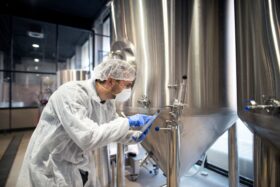
A defoamer that works perfectly in a shampoo base can behave completely differently in a cream, even when both come off the same production line. Manufacturers often find this out the expensive way: a product that solved foam in one formulation gets carried over to the next, and it either underperforms or introduces a texture
- Published in Defoamer