


Can a Powder Defoamer Be Added Directly to a Dry Mix?
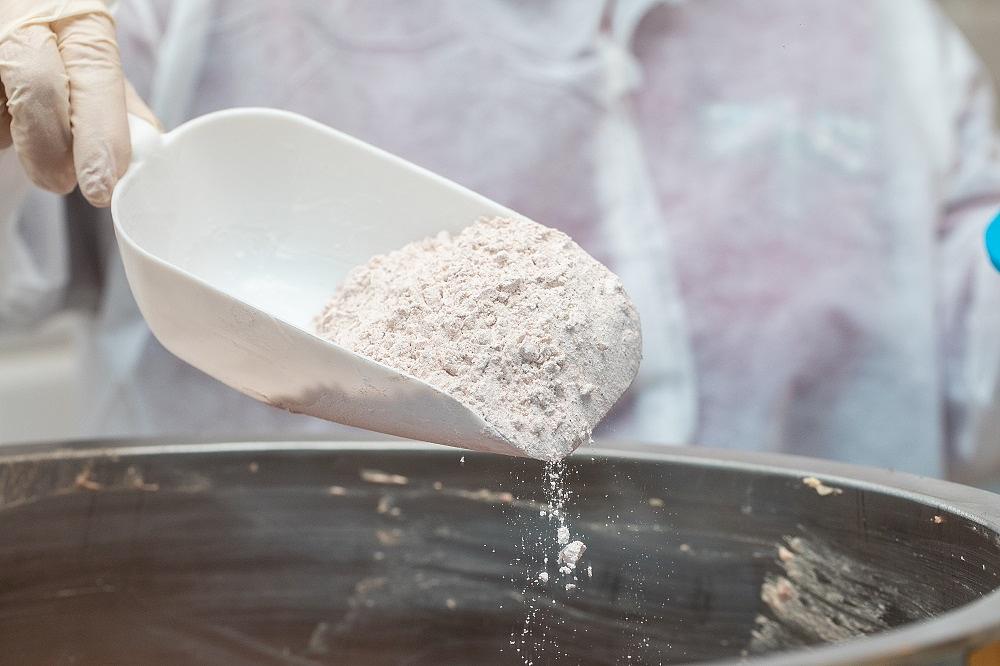
Yes, a powder defoamer can be added directly to a dry mix if the product is designed for dry blending. It must be distributed evenly throughout the formulation so it can perform when water is added. Poor distribution may lead to inconsistent air control, even when the correct amount of defoamer has been used.
For manufacturers using a powder defoamer for dry mix applications, the main concern is not simply whether the additive can be added. It is whether the mixing process allows it to work consistently in every batch.
How Does a Powder Defoamer Work in a Dry Mix?
Many powder defoamers contain active foam-control ingredients carried on a solid material.
This allows the additive to be handled and incorporated as a powder rather than introduced as a liquid.
When the dry formulation is mixed with water, the carrier and active ingredients interact with the wet mixture. Depending on the formulation, the defoamer can help reduce unwanted foam or entrained air during mixing and application.
The way the additive disperses after wetting is important. A powder that blends well in dry form may still perform poorly if it does not distribute effectively in the wet mixture.
Why Does Even Distribution Matter?
Powder defoamers are often used in relatively small amounts compared with the total dry formulation.
That makes consistent distribution especially important.
If the additive is concentrated in one part of the batch, some portions may receive too little treatment while others receive too much.
This can lead to differences in:
- Air content after water mixing
- Wet-mix consistency
- Surface appearance
- Performance between production batches
A uniform-looking dry blend does not necessarily prove that the defoamer is evenly distributed.
Manufacturers should use a validated mixing procedure appropriate for the additive and batch size.
Should You Add the Defoamer Before or After Other Ingredients?
The correct addition sequence depends on the formulation, mixing equipment, and product guidance.
Some dry-mix processes may benefit from introducing low-dose additives through a controlled premixing step. In other cases, direct addition during the main blending stage may be suitable.
Before changing the sequence, check whether the proposed method distributes the defoamer consistently.
Avoid assuming that a mixing procedure used for another powdered additive will work equally well for a defoamer.
At PMC Ouvrie, we offer powder defoamer formulations for applications including construction materials.
The appropriate incorporation method should be confirmed for the specific product and manufacturing process.
What Happens When Water Is Added?
Dry blending prepares the formulation, but much of the defoamer’s performance becomes apparent during wet mixing.
As the powder contacts water, the active ingredients must become available in the mixture to provide the intended foam-control effect.
The result depends on several factors, including the defoamer formulation, wetting behavior, and mixing conditions.
For example, a dry mortar may show acceptable powder distribution but develop excessive air during water mixing.
In that situation, the manufacturer should investigate wet-mix conditions and additive performance rather than assuming the dry blending stage is the only problem.
How Can You Check Whether the Defoamer Is Working?
Test the formulation using a consistent water-addition and mixing procedure.
Compare a control batch with a batch containing the proposed defoamer.
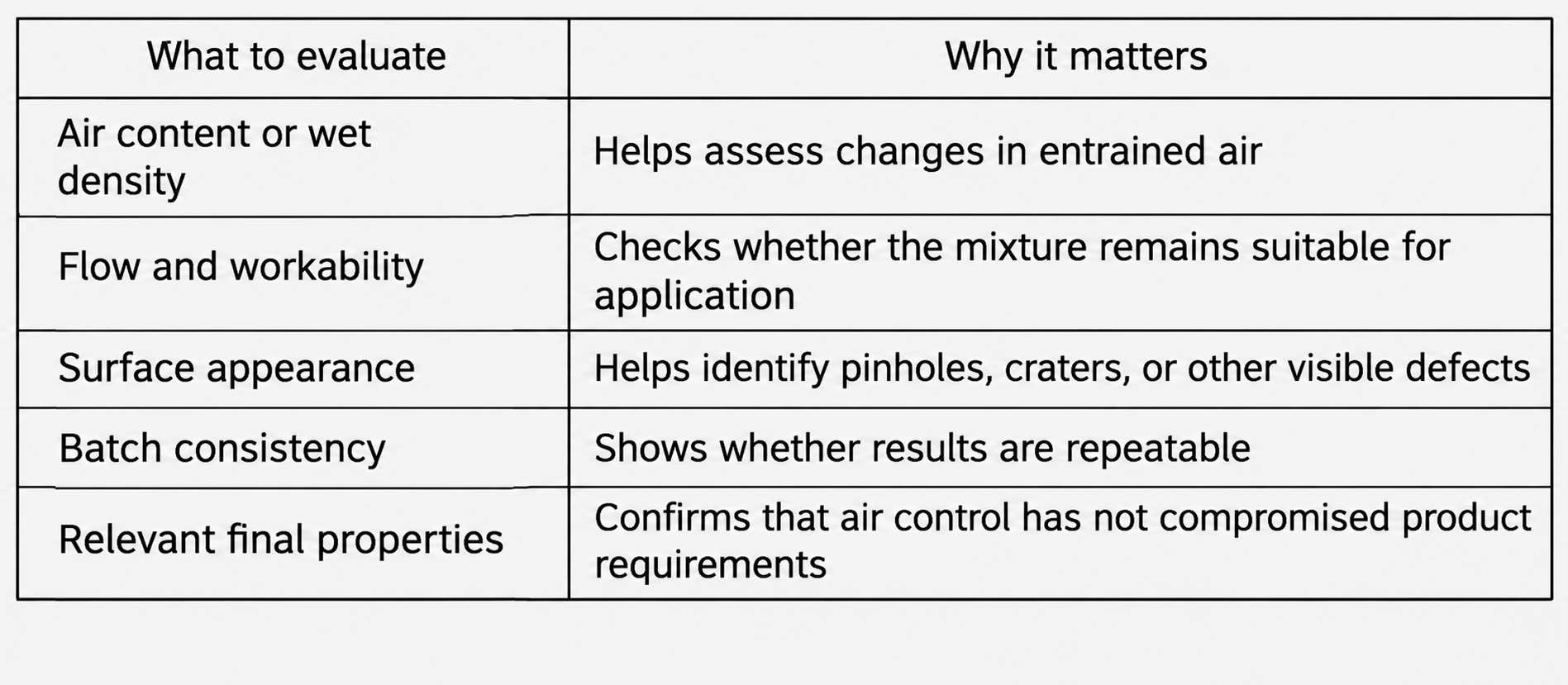
The most useful measurements depend on the product being manufactured.
For a self-leveling compound, surface finish and flow may be important. For another dry-mix product, different performance requirements may take priority.
Not every formulation should have the lowest possible air content. Some products intentionally retain air to achieve particular handling or performance characteristics.
What If the Powder Defoamer Does Not Work Consistently?
Start by comparing batches made under the same conditions.
Check the additive’s condition, weighing accuracy, addition sequence, and blending procedure.
Then review the water-mixing step.
If the results vary even when the procedure is consistent, the defoamer may need further compatibility testing with the other ingredients.
Moisture exposure during storage can also affect the handling of some powdered additives, so follow the product’s specified storage conditions.
Our research and development team can support evaluation of foam-control formulations under representative process conditions.
Frequently Asked Questions
Can powder defoamers be used in cement and gypsum mixes?
Yes. Suitable powder defoamers are used in cement-based and gypsum-based dry formulations. Product compatibility and performance should be verified for each application.
Does a powder defoamer need to dissolve completely in water?
Not necessarily. Performance depends on the formulation and how its active ingredients become available in the wet mixture. Complete dissolution is not a universal requirement.
Can too much powder defoamer affect a dry-mix product?
Yes. Excessive treatment may affect properties such as air content, workability, or surface appearance. The appropriate amount should be established through testing.
Need Help Evaluating a Powder Defoamer?
Adding a powder defoamer to a dry mix is only the first step. Reliable performance depends on how it is distributed, how it behaves after water addition, and whether the finished product meets its requirements.
At PMC Ouvrie, we help manufacturers evaluate foam-control formulations for their processing needs.
Contact our team to discuss your application.