


What Does a Specialty Ester Manufacturer Actually Do, and How Do You Choose One?
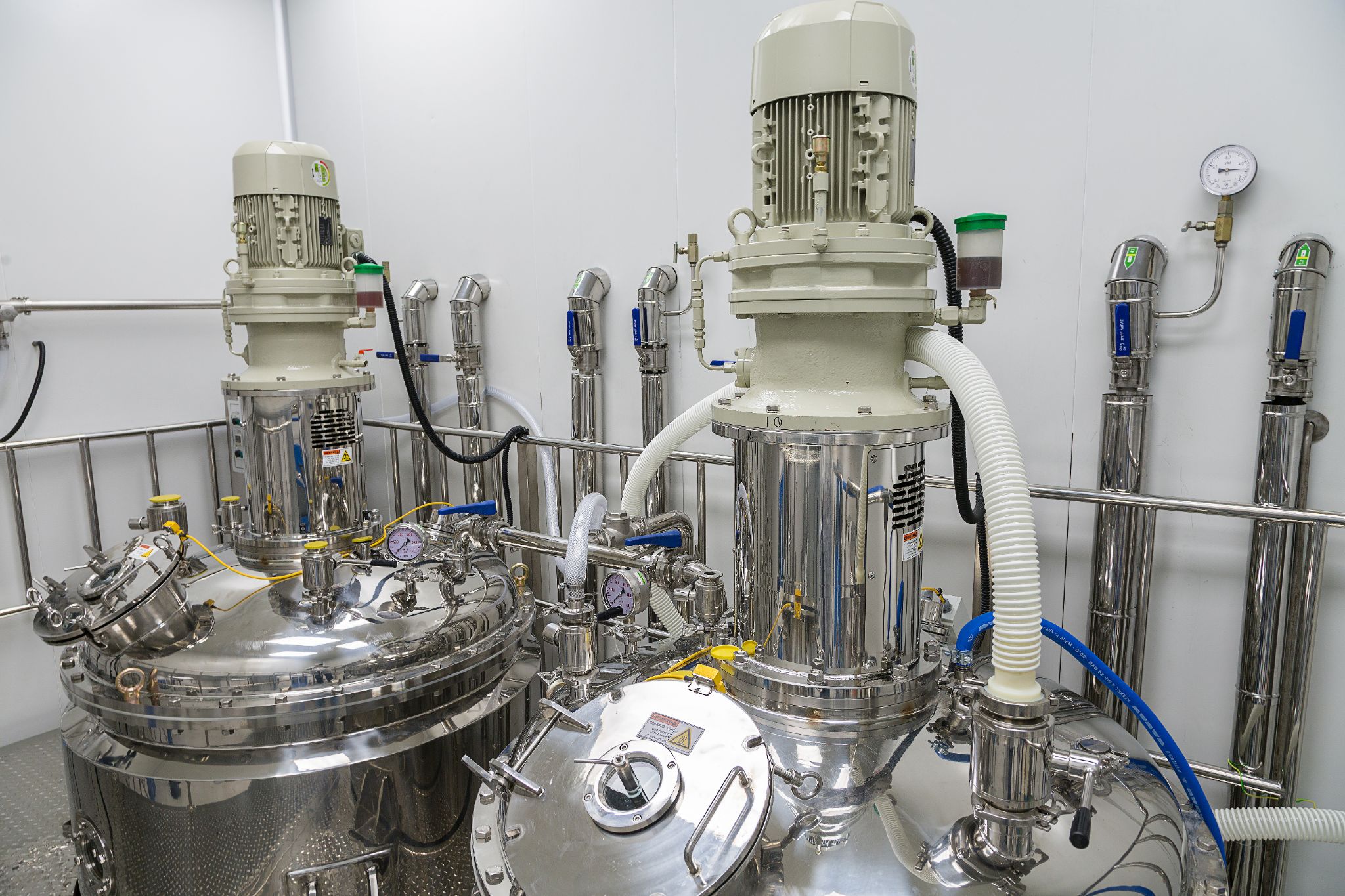
Ask most formulators what a specialty ester manufacturer does, and the answer usually stops at “they make esters.” That’s true, but it skips the part that actually matters when you’re picking a supplier: whether that manufacturer can match the chemistry to your formulation, not just produce it.
What is a specialty ester manufacturer?
A specialty ester manufacturer develops and produces ester-based materials selected for a specific function, such as emulsification, stabilization, or solubilization, rather than selling a single ester at high volume with no customization. At PMC Ouvrie, our specialty ester range covers agri-food, biotechnology, cosmetics, textiles, and lubricants, and each industry evaluates our esters against different performance requirements before using them. The chemistry itself is standard organic chemistry; the value is in matching it to what a formulation needs.
How are specialty esters manufactured?
Esterification, the reaction of an alcohol and an acid, is the base chemistry. What varies between manufacturers is the production capability built around it. Across PMC Ouvrie’s operations, our methods include esterification, saponification, powder impregnation, dispersion, blending, and silicone or fat emulsification. Which of these applies to a given ester depends on the target chemistry and its intended use. Not every ester in a catalog is built from every process listed here.
How manufacturers actually decide whether an ester fits your formulation
This is the part most explainers skip, and it’s where a specialty ester manufacturer either earns its role or doesn’t. A workable evaluation runs through several checks, not just a data sheet review:
Start with the function, not the ester
Define what the formulation needs first, such as emulsification for two otherwise incompatible phases, or stabilization to prevent separation over a product’s shelf life. The ester is chosen to meet that function, not the other way around.
Check compatibility with what’s already in the formulation
An ester that emulsifies well in isolation can behave differently once it’s mixed with the surfactants, actives or preservatives already in a formula. This is usually where a promising candidate fails.
Confirm it survives your process conditions
Temperature, pH and mixing intensity during manufacturing can degrade or destabilize an ester that performed fine in a bench test. Ask for performance data at your actual processing conditions, not standard test conditions.
Match documentation to your regulatory context
What a manufacturer needs to provide, and what a formulation can use, depends entirely on the industry and end use. Ask for the specific documentation relevant to your product before assuming a general approval covers it.
Test at your scale before you commit
A property that holds in a lab batch doesn’t always hold at production volume. Request a trial batch sized close to your actual run, not just a lab sample.
Custom specialty ester development
Beyond a standard catalog, we work with customers on formulations built around a specific application. That process generally follows the same shape: we start from the application requirement, move into formulation and development, evaluate the result against that requirement, and then support scale-up into production.
Two things worth knowing before you ask for a custom ester. First, “custom” here means adapting or combining known ester chemistries to fit your requirement, not open-ended synthesis of any structure you specify. Second, the development timeline depends on how close your requirement is to an existing formulation; a modification of something similar to our current range moves faster than a requirement with no precedent in it.
What to ask when you’re choosing a specialty ester manufacturer
- What applications do you currently support, and does that experience overlap with your industry?
- Can you test against my actual formulation, not just supply a data sheet for the ester alone?
- What happens if the standard product doesn’t fit– do you offer development, and what does that process look like?
- What documentation can you provide for the regulatory context my product falls under?
- How do you support scale-up from a trial batch to the volume I’ll actually need?
- What’s your batch-to-batch consistency record, and can you show it?
PMC Ouvrie’s role as a specialty ester manufacturer
We’ve built our specialty esters range around agri-food, biotechnology, cosmetics, and textiles and lubricants, backed by manufacturing capabilities that include esterification, saponification, powder impregnation, dispersion, blending and emulsification. If your formulation needs a specific property, or you’re weighing whether a standard ester or a custom formulation fits better, contact our technical team with the requirement and we’ll tell you directly whether it’s something we can support.
Conclusion
A specialty ester manufacturer is defined less by the ability to produce an ester and more by whether it will test that ester against your actual formulation, process conditions, and regulatory context before you commit to it. Ask for that testing up front, rather than evaluating a supplier on catalog breadth alone.
FAQs
How long does custom ester development typically take?
It depends on how close the requirement is to existing chemistry. A modification of a known formulation moves faster than a requirement with no precedent, so ask a manufacturer to scope the timeline against your specific need rather than assuming a standard turnaround.
Can one specialty ester serve more than one industry?
The underlying chemistry sometimes carries over, but the formulation usually needs to change between industries because compatibility, processing conditions, and regulatory requirements differ. Don’t assume a formulation used in one industry is ready for another without re-testing.
What’s the risk of skipping a trial batch before full-scale production?
Properties that hold in a lab sample don’t always hold at production volume, since mixing intensity, temperature control, and batch size all change. Skipping the trial step is the most common reason a formulation behaves differently once it reaches production.