


What Should You Check Before Switching to a Silicone-Free Defoamer?
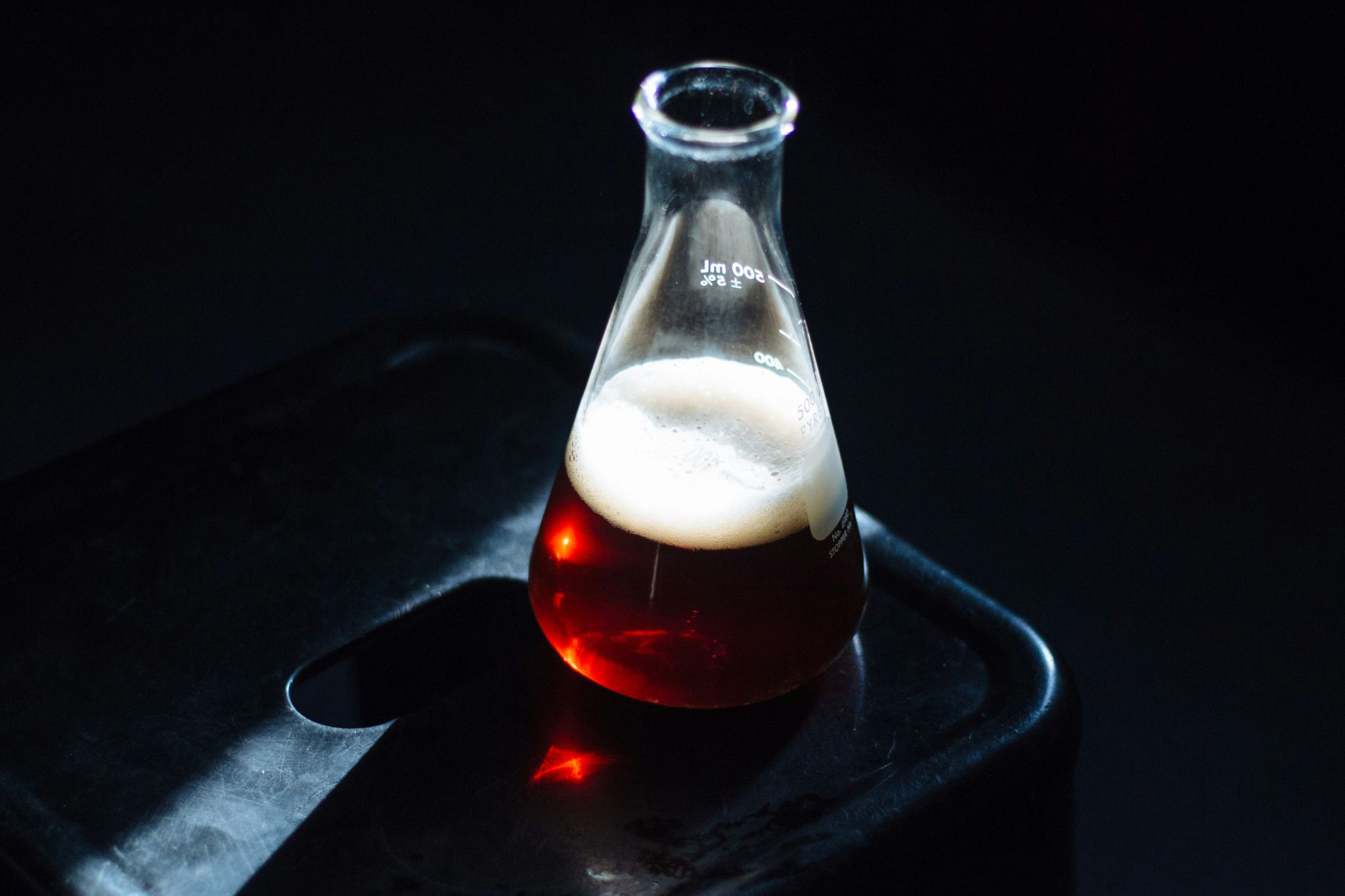
Before switching to a silicone-free defoamer, check why the change is needed, whether the alternative works with your process, and how it affects downstream operations. A silicone-free product may be appropriate when silicone residues or compatibility requirements are a concern, but it isn’t automatically the better option for every application.
When comparing silicone vs non silicone defoamer formulations, the goal is to find a product that controls foam without creating new processing or quality problems.
Why Would a Manufacturer Switch to a Silicone-Free Defoamer?
The decision usually starts with a specific process requirement.
For example, a manufacturer may need to review silicone use because of coating compatibility, filtration requirements, or restrictions on certain ingredients.
In some applications, silicone-based defoamers provide effective foam reduction at low treatment rates. However, the formulation must still be compatible with the process.
Silicone-free alternatives can be considered when:
- The finished product has restrictions on silicone-containing ingredients.
- Downstream equipment or processes require a different chemistry.
- The existing defoamer affects a required product property.
- A formulation change makes the current treatment unsuitable.
The reason for switching should be clearly defined before selecting an alternative.
What Should You Check Before Making the Change?
1. Compatibility with the process liquid
Check the composition of the liquid being treated.
A silicone-free defoamer that works in one formulation may not perform the same way in another.
Consider the relevant process conditions, including temperature, pH, mixing, and the presence of other additives.
The selected formulation should remain effective under the conditions it will encounter during production.
2. Effects on the finished product
Foam reduction is only one part of the evaluation.
Depending on the application, a defoamer may also affect properties such as appearance, coating quality, filtration, or product stability.
Identify which product-quality requirements must remain unchanged.
For example, a coating manufacturer may need to check for surface defects after replacing a defoamer, even when the new product controls visible foam.
3. Downstream processing requirements
Consider what happens after the foam-control stage.
Some processes involve membranes, filters, coating operations, or other equipment with specific chemical compatibility requirements.
Review the proposed formulation with the relevant technical team and equipment supplier where necessary.
Do not assume that every silicone-free product is suitable for sensitive equipment.
4. Performance over the full production cycle
A replacement may reduce foam quickly but perform differently during extended mixing or circulation.
Compare how the existing and proposed defoamers behave throughout the relevant process stages.
Check whether foam returns, whether the treatment remains effective, and whether the required dosage changes.
A short test alone may not represent full-scale operating conditions.
How Should You Compare the Two Formulations?
Test the current and proposed products under comparable conditions.
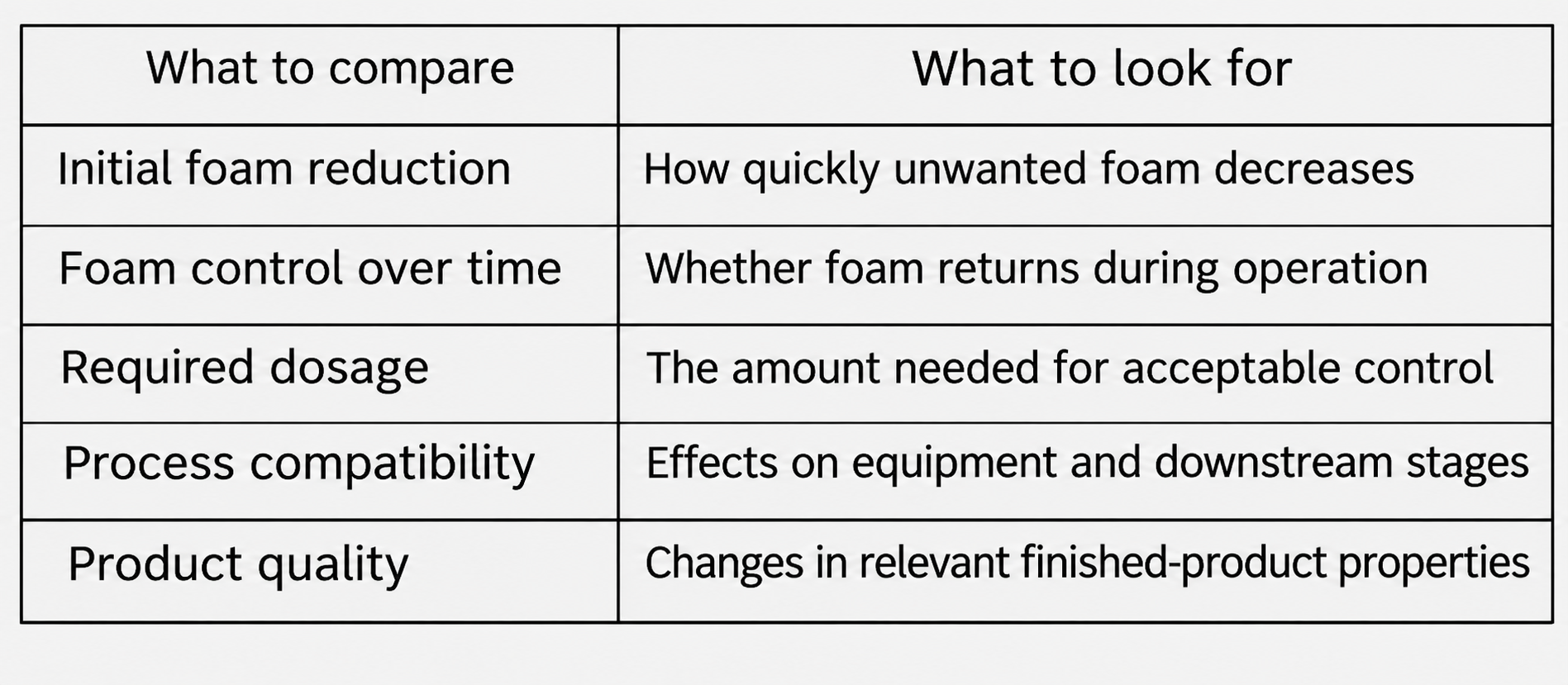
Where practical, begin with controlled testing using representative process samples.
If the results are acceptable, follow the facility’s approved procedure for a production trial.
Change one treatment variable at a time where possible so the results are easier to interpret.
Can Silicone-Free Defoamers Work as Well as Silicone-Based Products?
They can, depending on the formulation and application.
Silicone-free products may use fatty alcohols, esters, oils, or other active ingredients. Their effectiveness depends on how they interact with the foaming liquid and the operating conditions.
There is no universal performance ranking between silicone and silicone-free defoamers.
At PMC Ouvrie, we manufacture different defoamer chemistries and support custom defoamer formulation evaluation for specific processing requirements.
We can help manufacturers compare suitable options when compatibility or operating conditions require a change.
When Should You Keep the Existing Defoamer?
A switch may not be necessary if the current product controls foam effectively and meets the process’s quality, regulatory, and equipment requirements.
Changing chemistry without a clear reason can introduce additional testing, approval, and production work.
If the existing treatment has become less effective, first check whether the process itself has changed.
For wastewater applications, our existing guide on reducing foam in wastewater treatment explains why the choice of chemistry depends on treatment conditions and downstream compatibility.
Frequently Asked Questions
Are all silicone-free defoamers oil-based?
No. Silicone-free formulations can use different chemistries, including fatty alcohols, esters, and other non-silicone ingredients.
Does silicone-free mean the product is suitable for food processing?
No. Suitability depends on the specific formulation, intended use, and applicable regulatory requirements. Always verify the relevant product documentation.
Can you replace a silicone defoamer without changing the dosage?
Not necessarily. Different formulations may require different treatment rates. Establish the appropriate dose through testing.
Need Help Evaluating a Silicone-Free Alternative?
Before changing defoamers, confirm what the new product needs to achieve and how its performance will be measured.
At PMC Ouvrie, we help industrial manufacturers evaluate foam-control formulations for their processing conditions.
Contact our team to discuss your application.